
What to Pack for a Dubai Business Trip: A Men's Wardrobe Guide
There’s a particular kind of packing anxiety that comes with a Dubai business trip. You know it’s going to be hot properly hot, not “bring a light jacket just in case” hot. But you also know you’ll be walking into boardrooms, hotel lobbies, and client dinners where showing up underdressed isn’t really an option. And then there’s the air conditioning, which in Dubai has a reputation of its own: offices, malls, and hotel lobbies are often kept cold enough that you’ll want something to throw over a dress shirt indoors, even in August.
Put those three things together heat, formality, and aggressive AC and you’ve got a wardrobe puzzle that’s genuinely different from packing for a business trip to London or New York. This guide breaks down exactly what to bring, what fabrics actually hold up, and how to build a Dubai business trip packing list for men that doesn’t leave you either sweating through your shirt or shivering in a meeting room
1. Start With the Right Business Suit
You don’t need five suits for a Dubai trip. You need one or two that fit well, breathe reasonably, and can be dressed up or down depending on the day.
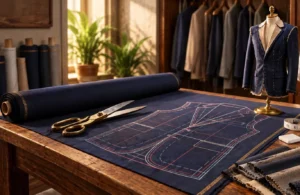
Navy and charcoal remain the safest, most versatile choices for Dubai’s business environment they read as professional across industries, work for everything from a first client meeting to a formal dinner, and don’t show travel creases the way lighter colours can. A well-cut suit in one of these two colours will get you through most of a trip on its own, provided you rotate the shirt and tie underneath.
Fit matters more here than people expect. A suit that’s slightly loose through the body will actually be more comfortable in Dubai’s heat than a slim, close-cut jacket there’s more room for air to move, and you won’t feel like you’re wearing a second skin the moment you step outside. This is one area where it pays to think ahead rather than pack whatever’s already in your closet. If you’re investing in a suit specifically for this kind of climate, working with a tailor who regularly cuts for Gulf conditions fabric weight, canvas, lining makes a real difference to how the jacket actually wears once you’re on the ground.
2. Pack Breathable Dress Shirts
For a short trip, three or four long-sleeved dress shirts is usually enough one worn on travel day, the rest rotated through meetings. White and pale blue are the workhorses; they’re neutral enough to pair with any suit or trouser combination and forgiving if you sweat through a walk between the hotel and a taxi. A subtle pattern or two adds variety without looking like you packed the same shirt four times.
The material is where a lot of men get it wrong. A heavy cotton twill that looks crisp in a temperate climate can feel stifling in Dubai, especially once you’re moving between outdoor heat and indoor cold repeatedly in one day. Lighter-weight cottons, or cotton blends built for breathability, hold their shape just as well but won’t leave you damp by the time you reach the meeting room.
3. Add Versatile Tailored Trousers
Not every part of a Dubai business trip calls for the full suit. A separate pair of tailored trousers navy, grey, or a neutral beige gives you something to wear with just a blazer or an open-collar shirt for business-casual meetings, client lunches, or an evening where a full suit would feel like overkill.
The advantage of packing trousers separately from a suit is flexibility: one pair of grey trousers can be paired with three different shirts and two different jackets, effectively multiplying your outfit options without adding much bulk to your suitcase.
4. Bring a Lightweight Blazer
A blazer is arguably the single most useful item on this list. It bridges the gap between full business formal and business casual, and it solves the AC problem you can leave it in your bag during the hot walk between buildings and put it on the moment you step into a cold office or restaurant.
Look for something unstructured or lightly padded rather than a heavily canvassed jacket. It’ll pack down smaller, feel less restrictive over a shirt, and won’t feel redundant if you’re already carrying a suit jacket for more formal meetings.
5. Don't Forget Business-Casual Clothing
Not every meeting in Dubai requires a full suit. Tech companies, startups, and creative agencies increasingly lean toward smart casual think chinos and a collared shirt, no tie while more traditional sectors like banking, finance, and government still expect the full formal treatment. In Dubai’s financial hub, DIFC, this split is visible even within the same building: a senior executive heading into a boardroom meeting is far more likely to be in a suit and tie than a colleague from a creative or tech-adjacent team.
The safest approach if you’re unsure is to ask, or default to the more formal option for a first meeting and adjust from there. Chinos, a well-fitted polo or collared shirt, and a lightweight blazer will cover you for most business-casual scenarios client lunches, informal check-ins, networking events without you needing to pack an entirely separate wardrobe.
6. Choose Shoes Carefully
One versatile pair of leather shoes oxfords, brogues, or a good pair of loafers will realistically get you through most of a trip. Black works with both navy and charcoal suits; brown gives you a bit more flexibility with business-casual outfits.
Comfort deserves more attention than it usually gets. Dubai business trips often involve more walking than people expect through hotel lobbies, across car parks in the heat, through mall corridors to reach a meeting venue and a stiff new pair of dress shoes straight out of the box is a fast way to regret your footwear choice by day two. Break shoes in before you travel, or bring a pair you already know is comfortable over a full day.
Sneakers and sandals aren’t appropriate in most business settings, so it’s worth packing at least one proper leather shoe even on a short trip, rather than relying on trainers you brought for the flight.
7. Pack a Few Useful Accessories
Keep this section short on purpose. A classic wristwatch, a good leather belt that matches your shoes, a pair of sunglasses for the glare outside, and a business card holder cover the practical bases without weighing down your bag. If you’re wearing a tie for formal meetings, a plain silk tie in a conservative pattern is more useful than something bold or novelty-print, which can read as unprofessional in a corporate Dubai setting.
The general rule with accessories on a business trip: fewer, better pieces beat a drawer’s worth of options you’ll never actually reach for.
8. Choose Suit Fabrics for Dubai's Climate
This is worth slowing down for, because fabric choice will affect your comfort more than almost anything else on this list.
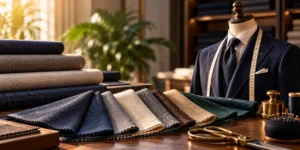
Tropical wool typically in the Super 100s to 120s range is the standard recommendation for formal Dubai meetings. It’s woven more openly than a standard wool suiting fabric, which lets air move through it, but it still holds a crease and structure the way a proper business suit should. If you’re only packing one suit for a trip that includes serious client meetings, this is generally the safer choice over linen.
Linen offers the best airflow of any suiting fabric and works well for daytime meetings or smart-casual settings, but it creases easily by the end of a car ride you’ll likely look a little rumpled, which isn’t ideal walking into a formal boardroom. It’s a better fit for a business-casual day than a high-stakes first meeting.
Cotton sits somewhere in between. It’s crisp, breathable, and holds up well for business-casual wear, though it’s generally considered less formal than wool for a full suit.
Linen-wool or cotton-linen blends try to split the difference more breathable than pure wool, less prone to creasing than pure linen. They’re a reasonable middle ground if you want one suit that can flex between formal and business-casual days.
As a rough guide, a fabric weight somewhere in the 180–240 GSM range tends to suit Dubai’s climate well across most of the year heavy enough to hold its shape, light enough not to feel oppressive. Jacket construction matters too: a half-lined or unlined jacket, with lighter canvassing and less padding through the shoulders, will breathe noticeably better than a fully lined, heavily structured jacket, without sacrificing much in the way of appearance. This is exactly the kind of detail an experienced Dubai tailor can help you get right matching fabric weight and construction to how much time you’ll actually spend outdoors versus in air-conditioned meeting rooms.
9. Keep Dubai's Cultural Dress Expectations in Mind
Business attire and general public dress in Dubai are two different conversations, and it’s worth understanding both.
For business meetings themselves, the expectations above suits, dress shirts, appropriate footwear apply. But once you step outside the office, into malls, souks, or government buildings, the UAE’s official guidance calls for modest dress: covering shoulders and knees, avoiding transparent or tight-fitting clothing, and steering clear of anything with offensive imagery or slogans.This isn’t a legal dress code enforced everywhere, but it reflects genuine cultural expectations, and dressing accordingly particularly in government buildings, where you may be turned away if dressed too casually is simply good practice.
Government offices in particular expect formal, conservative dress, and it’s worth having at least one outfit in your bag that clears that bar even if the rest of your trip is business-casual. If your itinerary includes a visit to a mosque, note that this requires long trousers and covered shoulders, with shoes removed at the entrance.
10. Think About the Season
Dubai runs hot for most of the year, but there’s a real difference between summer and winter packing.
Summer (roughly May through September) brings daytime temperatures that regularly climb past 40°C, alongside indoor spaces kept noticeably cold by air conditioning. This is where lightweight fabrics tropical wool, linen, cotton earn their keep, and where a packable blazer or light cardigan becomes less of an accessory and more of a necessity for surviving overly air-conditioned meeting rooms.
Winter (November through March) is a different trip entirely. Daytime temperatures typically sit in the 20–30°C range, pleasant by most standards, but evenings can drop into the mid-to-high teens Celsius cool enough that a light jacket or shawl for dinners and evening events is genuinely useful, not just for show.
Either way, the smart move is layering rather than heavy winter clothing, which you’ll rarely need even in the cooler months.
11. A Practical 2–3 Day Packing List
Category | Items |
Suit | 1 tailored suit (navy or charcoal), worn on travel day |
Shirts | 2–3 long-sleeved dress shirts |
Trousers | 1 pair dress trousers or dark chinos |
Blazer | 1 lightweight blazer (optional, for business-casual days) |
Shoes | 1 pair leather oxfords or loafers |
Underwear/socks | Enough for trip length |
Accessories | Watch, belt, sunglasses, business card holder |
Tech | Laptop, charger, power bank, Type G adapter |
Documents | Passport, e-visa printout, travel insurance |
Keep it simple. For a short trip, one suit and a rotation of shirts is genuinely enough there’s no need to pack a fresh outfit for every meeting.
12. A Practical 5–7 Day Packing List
For a longer trip, expand rather than duplicate the goal is more combinations, not more individual outfits.
Category | Items |
Suits | 2 tailored suits (navy + charcoal) |
Shirts | 4–5 long-sleeved dress shirts |
Trousers | 2 pairs dress trousers or chinos (navy, grey, beige) |
Blazers | 1–2 lightweight blazers or sport coats |
Shoes | 1 formal leather shoe + 1 smart-casual loafer |
Business-casual outfit | Polo or collared shirt + chinos, for informal dinners |
Layer | Light cardigan or shawl for AC-heavy interiors and cool evenings |
Underwear/socks/sleepwear | Full trip length |
Tech | Laptop, charger, power bank, Type G adapter, phone charger |
Documents | Passport, e-visa, flight and hotel confirmations, travel insurance |
Two suits, four or five shirts, and a couple of trouser and blazer combinations will realistically cover a full week without you repeating an obvious outfit or overpacking your case.
13. Common Packing Mistakes Men Make
- Packing heavy wool or thick fabrics that were fine for a European winter but become unbearable the moment you step outside in Dubai.
- Bringing too many suits when one or two well-chosen ones, rotated with different shirts, would do the job.
- Forgetting the air conditioning and ending up without a layer for cold offices and restaurants.
- Packing new, unbroken-in shoes and discovering on day two that they’re not built for a full day of walking.
- Relying only on formal wear and having nothing appropriate for a business-casual lunch or informal networking event.
- Ignoring fit in favour of whatever’s already in the closet an ill-fitting suit is uncomfortable in heat in a way a well-fitted one simply isn’t.
- Overpacking accessories that never leave the suitcase, adding weight and clutter for no real benefit.
14.Frequently Asked Questions
What is the business dress code for men in Dubai?
Business formal is the standard for most corporate, banking, and government meetings: tailored suit, long-sleeved shirt, conservative tie, and polished leather shoes. Tech and startup environments tend to be more relaxed, often smart casual.
Do I need to wear a tie for business meetings in Dubai?
Generally recommended for important meetings, government visits, and formal client interactions. In more casual or tech-oriented settings, it’s often optional.
What fabric is best for a suit in Dubai?
Tropical wool is the most reliable all-round choice for formal meetings it breathes well while holding its structure. Linen offers even more airflow but creases quickly, making it better suited to business-casual days than boardroom meetings.
What should I pack for a three-day business trip to Dubai?
One suit, two to three dress shirts, a pair of trousers or dark chinos, one versatile pair of leather shoes, and a lightweight blazer if your schedule includes any business-casual events.
Can men wear business-casual clothing in Dubai?
Yes, particularly in tech, creative, and startup environments. Chinos with a collared shirt or polo, paired with a lightweight blazer, generally works well though more traditional industries like finance and law often still expect a jacket and tie for client-facing meetings.
Is Dubai too hot for a suit?
Not if you choose the right fabric. Tropical wool suits are specifically designed for hot climates and are worn regularly in Dubai’s business world; the issue is usually fabric choice and construction, not the suit itself.
What should men wear in Dubai's public spaces?
Outside of business settings, official guidance recommends modest, loose-fitting clothing that covers shoulders and knees, particularly in malls, souks, and government buildings.
The Takeaway
A good Dubai business wardrobe isn’t about packing more it’s about packing smarter. Fewer, better-fitting pieces in fabrics that actually suit the climate will get you through meetings, client dinners, and the occasional walk through blistering heat far more comfortably than a suitcase full of options you never end up wearing. Get the fit and fabric right before you go, and the rest of the packing list mostly takes care of itself.

Daniel Carter
British, Dubai-based, and I've been around cloth most of my life. My grandfather had a small alterations shop in Leeds. I spent Saturdays there as a teenager, learning the difference between a canvassed chest and a fused one years before I understood why anyone should care.
I write about tailoring from the position of someone who's been fitted, let down, and fitted again. Drape, balance, sleeve pitch, the weight of a proper 13oz worsted. I'm not especially interested in brand names, mostly because they tend to get credit that belongs to the cut.
The UAE is still fairly new to me. Two years in and I'm working through the tailoring houses here, figuring out who cuts well and who just cuts fast. I'd rather take notes than hand out verdicts I haven't earned yet, so treat this as a map that's still being drawn.
Outside of clothes, I eat well and I eat curiously — the odder the menu, the more likely I am to book it. Whisky too, unhurried. Islay when the weather cooperates, Speyside when it doesn't.
Most of what I like takes time to make. That's more or less the whole thesis.
Last Updated:August 29, 2026
Categories
Recent Articles