
Bespoke vs Made-to-Measure vs Ready-to-Wear Suits…
If you need a suit that fits well and you’re not sure which route to take, the short answer is this: ready-to-wear works for tight budgets and quick needs, made-to-measure is the best value for most professionals and grooms, and bespoke is worth it only if you want a fully hand-built garment and don’t mind paying a premium in time and cost. In Dubai’s climate, market, and fast-paced lifestyle, the right choice depends less on prestige and more on how the suit will actually be used.
This distinction matters more in Dubai than almost anywhere else. The city has one of the highest concentrations of tailoring options in the world, price ranges swing wildly between neighbourhoods, and the heat and humidity change how a suit should be constructed. Choosing the wrong category doesn’t just waste money — it can mean a suit you avoid wearing.
This guide breaks down the real differences, what each option actually costs and takes in Dubai, and how to decide based on your body, budget, and timeline.
What's the Real Difference Between the Three?
At the core, the three categories differ in one thing: how much of the suit is built specifically around your body versus adjusted from an existing form.
- Ready-to-Wear (RTW): A suit manufactured in standard sizes (e.g., 40R, 42L) and altered afterward by a tailor.
- Made-to-Measure (MTM): A suit built from a standard block pattern that is adjusted using your individual measurements, then assembled from your choice of fabric and details.
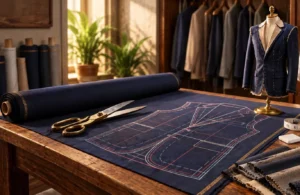
- Bespoke: A suit created from a unique pattern drafted from scratch for your body, usually involving multiple fittings and significant handwork.
The confusion usually comes from marketing. In Dubai, many tailoring shops use “bespoke” loosely to describe made-to-measure services. True bespoke tailoring is a much slower, more hands-on process — and it should involve a pattern that is genuinely yours, not a template.
Quick Comparison Table: Bespoke vs Made-to-Measure vs Ready-to-Wear
|
Feature |
Ready-to-Wear |
Made-to-Measure |
Bespoke |
|
Pattern origin |
Standard factory size |
Standard block, adjusted to your measurements |
Unique pattern drafted from scratch |
|
Fittings required |
0–1 |
1–2 |
2–4+ |
|
Typical turnaround in Dubai |
Same day |
2–4 weeks |
6–12 weeks |
|
Typical price range (AED) |
800 – 2,500 |
2,500 – 8,000 |
8,000 – 25,000+ |
|
Fabric choice |
Limited |
Wide |
Extensive, often mill-direct |
|
Fit accuracy |
Generic, alterable |
Good to very good |
Highest possible |
|
Hand-finishing |
Minimal to none |
Partial (varies by tailor) |
Extensive |
|
Best for |
Quick need, tight budget |
Most professionals, weddings, first custom suit |
Suit collectors, very particular fit needs |
How Fit Actually Differs
Fit is where the three categories separate most clearly, and it’s the reason people upgrade from one tier to another.
Ready-to-Wear
RTW suits are built on averaged body proportions. Even with alterations — taking in the waist, shortening sleeves — the jacket’s shoulder line, chest shaping, and overall drape stay fixed. A tailor can only adjust so much before the garment’s structure fights the changes.
Made-to-Measure
MTM starts from a block pattern but incorporates your shoulder slope, chest shape, posture, and preferred fit (slim, classic, or relaxed). This is the point where most people first feel a suit that looks “made for them” rather than “altered to fit.”
Bespoke
Bespoke goes further: the pattern is cut from your measurements alone, refined across multiple fittings, sometimes with a baste (trial) fitting where the coat is deliberately left unfinished so it can be reshaped on your body. This is the only category that can fully correct for asymmetry — most people have one shoulder slightly lower than the other, or one arm longer, and bespoke is built to account for that.
Cost Breakdown: What You're Actually Paying For
Price differences aren’t arbitrary — they reflect labor hours, pattern-making skill, and fabric sourcing.
Cost Driver | Ready-to-Wear | Made-to-Measure | Bespoke |
Labor hours (approx.) | 1–2 | 8–15 | 40–80+ |
Pattern-making | None (mass-produced) | Adjusted template | Drafted individually |
Fittings included | 0–1 | 1–2 | 2–4+ |
Fabric sourcing | Pre-selected bolts | Wider mill selection | Often direct mill access, rare cloths |
Alterations after delivery | Extra cost | Usually 1 free adjustment | Ongoing support, lifetime pattern kept on file |
A useful way to think about it: with RTW, you’re paying mostly for fabric and basic construction. With MTM, you’re paying for fit precision and fabric choice. With bespoke, you’re paying for skilled labor — the hours a master cutter and tailor spend shaping the garment by hand.
Which One Is Right for You? A Practical Checklist
Use this checklist to narrow down your decision quickly.
Choose Ready-to-Wear if:
- ✅ You need the suit within 24–48 hours
- ✅ Your body is close to a standard size with no major asymmetry
- ✅ Budget is under AED 2,500
- ✅ You need a backup or occasional-use suit
Choose Made-to-Measure if:
- ✅ You want a noticeably better fit than off-the-rack
- ✅ You have 2–4 weeks before you need the suit
- ✅ You’re buying for a wedding, new job, or first proper custom suit
- ✅ You want fabric and detail choices without bespoke pricing
Choose Bespoke if:
- ✅ You have noticeable body asymmetry standard patterns can’t handle
- ✅ You wear suits frequently and want the best possible long-term fit
- ✅ You can commit to 2–4+ in-person fittings
- ✅ Budget and timeline (6–12 weeks) aren’t major constraints
Why This Decision Is Different in Dubai
A few local factors change how these categories play out here compared to London, Milan, or New York.
Climate affects construction, not just fabric. A suit built for Dubai’s heat needs lighter canvassing, breathable linings, and often an unstructured or half-canvas build — regardless of whether it’s MTM or bespoke. A heavily padded, fully canvassed European-style suit can feel noticeably heavier in Dubai’s humidity.
Turnaround times are faster than in Savile Row-style markets. Many Dubai tailors offer MTM in 2–3 weeks and even fast-tracked bespoke in 4–6 weeks, largely because of in-house or regional production rather than everything being hand-cut on-site.
The market is crowded, and “bespoke” is used loosely. Because Dubai has such a high volume of tailoring shops competing for tourists and residents alike, it’s common to see “bespoke” used for what is really made-to-measure. Asking directly whether a unique pattern is drafted for you — or an existing block is adjusted — is the fastest way to verify.
Fabric sourcing is a genuine strength. Dubai’s tailoring district has strong access to Italian, English, and regional mills, which means even mid-tier MTM shops often carry fabric quality that would cost more elsewhere
Expert Tips
- Ask how many fittings are included before you pay. This single question reveals more about quality than almost anything else.
- Bring or wear the shoes and belt you’ll actually pair with the suit to your fitting — trouser break and proportions depend on it.
- For Dubai’s climate, ask specifically about canvas weight and lining breathability, not just fabric choice.
- If buying for a wedding, order at least 8–10 weeks ahead, even for MTM, to allow time for a second fitting and any last alterations.
- Keep your measurements and pattern on file with whichever tailor you choose — reordering later becomes faster and more accurate.
Common Mistakes to Avoid
- Assuming higher price always means better fit. Some MTM tailors with skilled fitters outperform overpriced “bespoke” shops using recycled block patterns.
- Skipping the second fitting to save time. The first fitting almost always reveals adjustments; skipping the follow-up locks in avoidable flaws.
- Choosing fabric before construction. A beautiful cloth in the wrong canvas weight for Dubai’s climate will feel uncomfortable regardless of how it looks.
- Not asking what “bespoke” actually means at that shop. Terminology isn’t regulated — always ask about the pattern-making process directly.
- Buying a suit for a single event without considering rewear. If you’ll wear it again, MTM is often smarter than one-time RTW spending.
Key Takeaways
- Ready-to-wear suits off standard sizes altered afterward; best for speed and budget.
- Made-to-measure adjusts a block pattern to your body; the best balance of fit, cost, and turnaround for most buyers.
- Bespoke suits are built from a fully unique pattern with extensive hand-finishing; best for frequent wearers or complex fit needs.
- In Dubai, always confirm fitting count, construction style for the climate, and whether “bespoke” means a genuinely unique pattern.
- Fit quality depends more on the tailor’s skill and fitting process than on the label used to describe the service.
Frequently Asked Questions
1. What is the main difference between bespoke and made-to-measure suits?
suits are built from a pattern created uniquely for your body, while made-to-measure suits adjust an existing standard pattern using your measurements. Bespoke involves more fittings and hand-finishing.
2. Is made-to-measure worth it over ready-to-wear?
For most people who wear suits more than occasionally, yes. MTM offers a noticeably better fit and wider fabric choice for a moderate price increase over ready-to-wear.
3. How long does it take to get a suit made in Dubai?
Ready-to-wear can be altered same-day. Made-to-measure typically takes 2–4 weeks. Bespoke usually takes 6–12 weeks, depending on the tailor and number of fittings.
4. How much does a bespoke suit cost in Dubai?
Bespoke suits in Dubai generally start around AED 8,000 and can exceed AED 25,000, depending on the fabric, tailor’s reputation, and level of handwork involved.
5. Can made-to-measure suits fit as well as bespoke?
For most body types, yes — MTM can achieve a very close fit. Bespoke pulls ahead mainly for bodies with significant asymmetry or for buyers who want the maximum level of customization.
6. What suit type is best for a wedding in Dubai?
Made-to-measure is typically the best fit for weddings — it balances a tailored appearance with a manageable timeline, provided you order at least 8–10 weeks in advance.
7. Do I need multiple fittings for made-to-measure suits?
Most MTM orders include one to two fittings. A second fitting is strongly recommended to catch adjustments the first fitting reveals.
8. Why is "bespoke" used so loosely in Dubai tailoring shops?
Because the term isn’t legally regulated, some shops use it as a marketing label for made-to-measure services. Always ask whether your pattern is created from scratch or adjusted from a template.
9. What fabric is best for suits in Dubai's climate? Lightweight wools
Lightweight wools (Super 110s–130s), wool-linen blends, and breathable half-canvas or unstructured constructions perform best in Dubai’s heat and humidity.
10. Is ready-to-wear a bad option?
Not necessarily. For occasional wear, tight budgets, or urgent needs, ready-to-wear with professional alterations can be a practical and perfectly respectable choice.
Conclusion
There’s no universally “better” option among bespoke, made-to-measure, and ready-to-wear — only the option that matches your body, timeline, and how often you’ll actually wear the suit. For most professionals and wedding buyers in Dubai, made-to-measure hits the sweet spot between fit, fabric choice, and cost. Ready-to-wear remains a smart fallback for speed and budget, while bespoke is worth its premium for frequent wearers or those with fitting challenges standard patterns can’t solve.
Whichever route you choose, the details that matter most are the same: ask how many fittings are included, understand exactly how the pattern is made, and make sure the construction suits Dubai’s climate — not just the fabric’s appearance.

Daniel Carter
British, Dubai-based, and I've been around cloth most of my life. My grandfather had a small alterations shop in Leeds. I spent Saturdays there as a teenager, learning the difference between a canvassed chest and a fused one years before I understood why anyone should care.
I write about tailoring from the position of someone who's been fitted, let down, and fitted again. Drape, balance, sleeve pitch, the weight of a proper 13oz worsted. I'm not especially interested in brand names, mostly because they tend to get credit that belongs to the cut.
The UAE is still fairly new to me. Two years in and I'm working through the tailoring houses here, figuring out who cuts well and who just cuts fast. I'd rather take notes than hand out verdicts I haven't earned yet, so treat this as a map that's still being drawn.
Outside of clothes, I eat well and I eat curiously — the odder the menu, the more likely I am to book it. Whisky too, unhurried. Islay when the weather cooperates, Speyside when it doesn't.
Most of what I like takes time to make. That's more or less the whole thesis.
Last Updated:August 25, 2026
Categories
Recent Articles