
Full Canvas vs Half Canvas Suits: What's the Difference and Which Is Better?
You’ve probably spent hours choosing the perfect fabric for a custom suit. You’ve agonized over the colour, the weave, the weight. You’ve discussed buttonhole style and pocket placement. Then, almost as an afterthought, someone asks: “And what construction would you like?”
You nod as if you know what they mean.
The truth is, most men don’t think about what’s inside their jacket until something goes wrong or they realize they’ve paid a lot of money without understanding what they actually bought.
Canvas the internal foundation of a well-made suit is one of those invisible decisions that shapes how your jacket looks, feels, and performs over time. It’s also one of the most misunderstood aspects of bespoke tailoring. Full canvas gets marketed as the obvious choice for anyone serious about quality. Half canvas is dismissed as a budget compromise. Fused construction is often written off entirely.
But the reality is messier and more practical than that.
The right construction for your suit depends far less on which term sounds most luxurious and far more on how you’ll actually wear the jacket, what you expect from it, and what combination of quality, cost, and practicality makes sense for your life.
What Does Canvas Mean in a Suit?
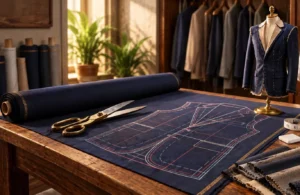
A suit jacket has layers. Starting from the outside, there’s the cloth you see and feel. Underneath that is a structured layer the canvas or interlining. Then there’s the lining that covers everything internally.
The canvas sits between these layers, particularly through the chest and lapels. Its job is to give the jacket shape, support the lapels so they can roll naturally, and help the whole thing hang correctly on your body.
Think of canvas as the skeleton and muscle system of your jacket. The outer cloth is the skin. Without proper internal structure, even beautiful cloth will look flat and lifeless.
There are two fundamentally different ways to attach this internal structure: you can sew it in place, or you can glue it.
Floating canvas is sewn into position. Stitches hold it in place, but the layers retain some independent movement. This is the traditional method and what most people mean when they talk about a “canvassed” suit.
Fused construction uses a heat-activated adhesive to bond the interlining directly to the outer cloth. The two layers become essentially one. No stitching is involved in the primary attachment.
These two approaches create fundamentally different garments, and understanding the distinction matters far more than the marketing around either one.
What Is a Full-Canvas Suit?
A full-canvas jacket has sewn canvas extending through most or all of the front, normally running from the shoulder and chest area down toward the hem. The canvas is attached using a combination of pad stitching visible diagonal stitches you might see under the lapel if you look closely and internal seaming.
This is the most labour-intensive and traditionally sophisticated construction method. A skilled tailor can shape the canvas through careful stitching, creating a structure that responds naturally to your body’s movement. Over time, as you wear and move in the jacket, a well-made full-canvas garment can gradually conform to your posture and frame.
Full canvas gives you maximum flexibility. If something needs reshaping or repair years down the line, that sewn structure is much easier to work with than bonded layers. The chest feels three-dimensional and shaped, not flat or pressed. The lapel can develop a natural roll rather than existing as a sharp crease.
But here’s what full canvas doesn’t automatically give you: a perfect fit, a cooler jacket in summer, a lighter feel, or guaranteed longevity. A full-canvas jacket cut from a bad pattern will still fit badly. A heavy full-canvas suit in a dense fabric will feel warmer than a lightweight half-canvas jacket. And neither the canvas nor the tailoring method can prevent damage from poor cleaning or neglect.
Full canvas requires more skilled labour. You’re paying for that expertise and handwork. You’re also paying for a structure that will serve you well if this is a suit you plan to wear frequently and keep for years.
What Is a Half-Canvas Suit?
Half canvas is sometimes presented as the budget alternative to full canvas, but that’s a mischaracterization. It’s actually a deliberate hybrid construction that many experienced tailors consider the most practical choice.
With half canvas, sewn canvas is used through the chest and lapels the areas where the eye sees the most definition and where structure matters most. The lower portion of the front, below approximately the button stance, typically uses a different support method, often lighter fusing or a less substantial interlining.
This approach makes sense. Your lapels and chest need that responsive, shaped structure. The lower front, which experiences less movement and doesn’t need to roll or conform quite as dramatically, can work with a simpler support system. You get the benefits of floating canvas where it matters while avoiding the labour cost and weight of maintaining that structure all the way down the jacket.
Half canvas often delivers the strongest value proposition. It produces a natural-looking chest and lapel, performs well in everyday professional wear, weighs less than a heavily constructed full-canvas jacket, and costs significantly less to produce. When well-made, it’s not a compromise it’s a sensible engineering choice.
Many professionals wear half-canvas suits comfortably for years, especially if they rotate between several jackets rather than wearing the same suit constantly.
What Is a Fused Suit?
Fused construction bonds an interlining coated with thermoplastic adhesive directly to the reverse of the outer cloth. Heat, pressure, and timing activate the adhesive, creating a laminated bond between two layers.
Fusing is faster and cheaper to produce at scale. It creates consistent shape in factory production. When engineered properly and applied with precision, fused construction can produce a clean, crisp appearance.
But here’s where fused construction gets a bad reputation: it’s genuinely vulnerable to poor execution. If the adhesive quality is poor, the fabrics are incompatible, the temperature or pressure settings are wrong, or the garment is subjected to excessive heat, moisture, or aggressive cleaning, the bond can fail. Delamination where the layers separate can happen. Bubbling can occur where the interlining blisters away from the cloth.
The problem isn’t fusing itself. Modern fusing technology, when applied correctly, isn’t automatically defective. The problem is that fused construction is unforgiving. Poor fusing shows up immediately and is difficult to repair. A well-made fused suit, however, can outperform a cheaply made canvassed one.
For occasional wear or budget-conscious buyers, a well-engineered fused jacket from a manufacturer with rigorous quality control can work perfectly fine. It’s when fusing is done hastily, with inferior adhesive, or paired with incompatible fabrics that problems emerge.
Full Canvas vs Half Canvas vs Fused: A Comparison
Factor | Full Canvas | Half Canvas | Fused |
Construction | Sewn canvas extends through most of the jacket front | Sewn canvas in chest and lapels; lower front typically fused or lighter support | Interlining bonded to outer cloth with heat-activated adhesive |
Drape | Usually the most natural and three-dimensional when well made | Natural through chest and lapels; firmer through lower front | Can be clean and consistent, but may feel more uniform |
Shape over time | Gradually conforms to wear and body; can be reshaped | Good shape retention with some adaptation | Shape largely fixed by pattern and bonding |
Lapel roll | Often the most natural, especially with skilled pad stitching | Usually superior to full fused; excellent when well done | Can be attractive with good patterning and pressing, though traditionally less favoured |
Comfort | Can feel flexible and natural; not automatically lighter or cooler | Often strikes a comfortable middle ground | Depends on total garment construction; some feel stiff, others very comfortable |
Breathability | Canvas is still an added layer; depends on total package | Can be lighter in lower front | Depends on shell fabric, lining, and interlining flexibility |
Durability | Potentially strong if canvas, cloth, and workmanship are good | Generally durable for regular wear | Modern fusing can be durable; poor bonding and incorrect cleaning can cause failure |
Maintenance | Requires careful pressing and professional cleaning | Similar care, usually with fewer fully canvassed areas | Needs careful cleaning and heat management; failed bonding is difficult to reverse |
Price | Highest labour and usually highest price | Often the strongest value | Lowest manufacturing cost; value depends on fabric and construction quality |
Best for | Core wardrobe piece, frequent use, investment mindset | First serious custom suit, regular professional wear, balanced budget | Occasional wear, lower budget, careful engineering |
Drape, Fit, and Lapel Roll: What You'll Actually Notice
The technical distinctions between construction methods matter less than how they affect what you see and feel when wearing the jacket.
Drape describes how the jacket hangs and moves on your body. A floating canvas allows the tailor to shape the internal structure through stitching, creating a foundation that distributes tension naturally across the chest. This generally produces a more gradual, organic contour than a fully bonded approach.
But drape depends on far more than construction alone. The cloth itself matters a dense, heavy fabric will drape differently than a soft, fluid one. The pattern matters. Shoulder balance, chest suppression, armhole height, and sleeve pitch all influence how the jacket actually hangs. Your posture shapes it too.
Full canvas gives the tailor the greatest freedom to create natural drape. Half canvas can still produce excellent results, particularly through the visible chest and lapel area. Fused jackets can also drape beautifully if the cloth and interlining are compatible and the pattern is good.
Lapel roll gets discussed endlessly in tailoring circles, partly because it’s visible and partly because it’s often used as a proxy for quality. A natural roll where the lapel curves gracefully rather than appearing as a sharp pressed crease is created by the relationship between the lapel cloth, the canvas, the pad stitching, and the roll line itself.
Full canvas creates ideal conditions for achieving a beautiful roll. But it doesn’t guarantee one. Poor stitching or heavy pad stitching can still produce an awkward lapel.
Half canvas regularly produces excellent lapel roll in the visible upper area.
Modern fused suits, despite what traditionalists claim, can have attractive lapels. Careful patterning and precise pressing can create convincing results. It won’t feel quite the same as a hand-padded lapel, but it doesn’t have to look lifeless.
Comfort and Breathability: The Real Story
Here’s a common misconception: that canvas somehow makes a suit breathe.
It doesn’t. Canvas is an added internal layer. More layers generally mean less air movement, not more.
What makes a jacket comfortable and breathable is the total package. The weave of the outer cloth matters enormously an open, loosely woven fabric allows far more air movement than a dense one. The lining matters. Does it cover the entire inside, or is it half-lined or unlined? That makes a dramatic difference. The weight of the canvas itself: a light canvas uses less material than a heavy one. Shoulder padding, armhole height, jacket length, and how much ease (extra room) is built into the chest and waist all influence how the jacket feels on your body.
For warm weather, a jacket in a lightweight, open-weave cloth with half-lining and appropriate internal structure will feel cooler and more comfortable than a heavily lined, densely woven full-canvas jacket, regardless of construction method.
This is worth emphasizing because it’s where many people go wrong. They choose full canvas thinking it will give them a cooler summer jacket, then pair it with a heavyweight fabric and full lining. The construction wasn’t the limiting factor.
Does Suit Construction Matter in Dubai?
Dubai’s climate high heat for much of the year, air-conditioned interiors, humidity during certain seasons creates genuine considerations for suit construction. But it doesn’t automatically point you toward one method.
Yes, lightweight cloth matters. Yes, smart lining choices matter. Yes, the total garment construction matters. But “full canvas” and “Dubai summer” aren’t synonyms for the right choice.
Someone working in a heavily air-conditioned office environment might be perfectly comfortable in a well-made half-canvas suit in an appropriate cloth. Someone commuting by car, walking to meetings, and sitting in warm lobbies might benefit more from a lightweight, half-lined jacket regardless of construction method.
If you’re a professional wearing tailored jackets several days weekly, construction quality becomes more important because your suits experience repeated flexing, regular cleaning, and the possibility of future reshaping. That’s when full canvas makes more sense as an investment not because it’s inherently cooler, but because you’re wearing it enough that the quality and longevity justify the cost.
Ask yourself honestly: Will I wear this jacket in outdoor heat, or mostly in air-conditioned spaces? How frequently? Do I rotate between several suits, or do I depend on one or two? How often do I send jackets for cleaning? Do I travel with these suits? The answers to those questions matter more than which construction term sounds more prestigious.
Is Full Canvas Always Better?
No.
Full canvas is generally the most traditionally constructed option. It offers real advantages in flexibility, reshaping potential, and the quality of tailoring it allows. But it’s not automatically the right choice for everyone.
A poorly made full-canvas jacket is still poorly made. A beautifully constructed half-canvas suit will wear better and look better than a rushed full-canvas garment. A high-quality fused jacket designed for its intended purpose will outperform a cheaply made canvassed one.
Construction is important, but it’s part of a larger equation. Fabric quality, weave, lining choice, pattern accuracy, shoulder design, workmanship, fit, and how you care for the garment all matter. A mediocre full-canvas suit in a second-rate fabric will disappoint you. A well-made half-canvas or fused suit in excellent cloth with proper fit and finishing will serve you far better.
Which Suit Construction Should You Choose?
The honest answer is: it depends on your situation.
Choose full canvas if:
- This is a core piece of your professional wardrobe that you’ll wear frequently for years.
- You value traditional tailoring and understand what you’re paying for.
- You want maximum flexibility for future reshaping or repair.
- You’re buying a premium jacket and want the construction to match the quality of the cloth and tailoring.
- Budget is not your primary constraint.
Full canvas makes sense as a long-term investment. It’s not the best choice if you’re buying one suit you’ll wear occasionally, or if you’re price-conscious.
Choose half canvas if:
- You want a natural-looking chest and lapel without paying for full-canvas labour.
- You wear suits several times weekly but rotate between multiple jackets.
- You want practical everyday performance.
- You’re building your first serious custom wardrobe.
- You want the strongest balance of quality and cost.
- You care about construction but aren’t prepared to pay premium full-canvas prices.
For many professionals, half canvas can be an excellent balance of quality, practicality and cost. It delivers real quality, natural structure where it matters, and practical value.
Consider fused if:
- The suit is for occasional wear events, travel, specific occasions.
- Budget is your primary constraint.
- A knowledgeable manufacturer has selected high-quality materials and controlled fusing specifically for the cloth you’ve chosen.
- You’ve seen examples of their work and are comfortable with the quality level.
A well-made fused jacket can absolutely work. Just don’t assume fused automatically means cheap or poor quality. Verify the materials and craftsmanship.
How Can You Tell If a Suit Is Full Canvas or Half Canvas?
The pinch test gets discussed constantly in menswear circles, usually with more confidence than it deserves.
The basic idea is simple:
- Open the jacket
- Gently separate the outer cloth from the lining in an inconspicuous area
- Feel whether an independent layer moves between them
- If you feel a flexible middle layer in the chest and lower front, it’s probably full canvas
- If you feel it in the chest but the lower front feels bonded flat, it’s likely half canvas
- If everything feels uniformly bonded with no independent movement, it’s probably fused
But here’s what makes this test unreliable as definitive proof:
Thick linings can confuse the sensation. Half-canvas jackets feel different in different areas you might feel canvas in one spot and fusing in another. Some jackets use layered interlinings that complicate the feel. The test can damage delicate cloth or disturb the lining. You might mistake padding or seam allowance for canvas. Different constructions can feel remarkably similar to an inexperienced hand.
Use the pinch test as a screening method, not proof. If you want to know the actual construction, ask the tailor or request the manufacturer’s specification. That’s far more reliable than relying on your fingertips.
Questions to Ask Your Tailor Before Ordering a Suit
Rather than trying to diagnose construction yourself, have a genuine conversation with your tailor. Ask:
- Is this full canvas, half canvas, or fused?
- Where does the canvas stop in a half-canvas jacket?
- Is any part of the jacket fused?
- What material is the canvas made from?
- Is the canvas hand-padded or machine-stitched?
- Is the canvas suitable for the cloth I’ve chosen?
- How should I care for this jacket? What cleaning process is recommended?
- Does this construction make sense for how I’ll wear the suit?
- If I need reshaping or repairs in five years, how will this construction affect your options?
A tailor who can answer these questions clearly is someone who understands their craft. A tailor who just nods and says “full canvas is best” isn’t thinking about your actual needs.
Does Full Canvas Last Longer?
This gets asked constantly, and the answer is more complicated than the question suggests.
Sewn canvas avoids depending on a continuous adhesive bond. If the stitching is good and the cloth is quality, a full-canvas jacket has structural advantages for long-term wear and future repair. A fused bond can fail through delamination if subjected to excessive heat, moisture, or aggressive cleaning. Sewn canvas can offer advantages for long-term repair and reshaping, but actual longevity depends on the cloth, workmanship and care.
But actual garment longevity depends on far more than just the construction method. The cloth itself matters dense, durable cloth resists abrasion better than delicate cloth. Canvas and interlining quality matters. Stitching and finishing matter. How often you wear the suit matters (wearing one suit constantly causes faster deterioration than rotating between several). How much you perspire, how carefully you store the jacket, how good your dry cleaner is, whether you get small repairs done promptly all of these influence how long your suit actually lasts.
Someone wearing the same full-canvas suit five days a week without proper care might see it fail within a few years. Someone rotating between several well-made fused suits and having them cleaned carefully might wear them for a decade.
There’s no magic lifespan number. “Full canvas lasts 20 years” is marketing, not evidence. A fused suit isn’t automatically doomed. Construction matters, but it’s only part of the story.
Frequently Asked Questions
Is full canvas better than half canvas?
Better in some respects, yes. It’s more structurally flexible, easier to reshape, and allows more sophisticated tailoring. But “better” depends on your needs and budget. Half canvas can be genuinely excellent.
Is half canvas worth it?
Absolutely, especially if this is your first custom suit or you wear jackets regularly but rotate between several. You get real quality and natural structure at a more reasonable price point.
What is a fused suit?
The interlining is bonded to the outer cloth using heat-activated adhesive rather than sewn into place. It’s faster and cheaper to produce and can work very well when properly engineered.
Do fused suits bubble?
They can, if the bonding is poor, the materials are incompatible, or the garment is subjected to excessive heat or aggressive cleaning. But properly made modern fused construction is not automatically destined to fail.
Does full canvas breathe better?
No. Canvas is an added layer. Breathability depends on the total garment fabric weave, lining, padding, armhole not on construction method.
How do I identify a canvassed suit?
Ask the tailor or manufacturer. The pinch test can be indicative but isn’t definitive proof.
Which construction is best for Dubai?
Depends on your use. Consider full or half canvas for frequent wear, lightweight cloth and smart lining regardless of method, and proper care for any construction you choose.
Does full canvas guarantee a better fit?
No. Construction doesn’t replace good pattern-making. The pattern and fit come first.
Which construction is best for frequent business wear?
Half canvas is often the sweet spot. Full canvas if budget allows and you’ll wear the suits regularly for years.
The takeaway? Construction matters, but it doesn’t explain everything about a suit. Before you worry about whether the canvas is floating or fused, make sure you’ve chosen a good pattern, quality cloth, and a tailor who understands your needs.
If you’re considering a bespoke or made-to-measure suit and want to understand what construction makes sense for your lifestyle and wardrobe, talk to an experienced tailor. The right choice isn’t the most expensive one it’s the one that fits how you actually live.

Daniel Carter
British, Dubai-based, and I've been around cloth most of my life. My grandfather had a small alterations shop in Leeds. I spent Saturdays there as a teenager, learning the difference between a canvassed chest and a fused one years before I understood why anyone should care.
I write about tailoring from the position of someone who's been fitted, let down, and fitted again. Drape, balance, sleeve pitch, the weight of a proper 13oz worsted. I'm not especially interested in brand names, mostly because they tend to get credit that belongs to the cut.
The UAE is still fairly new to me. Two years in and I'm working through the tailoring houses here, figuring out who cuts well and who just cuts fast. I'd rather take notes than hand out verdicts I haven't earned yet, so treat this as a map that's still being drawn.
Outside of clothes, I eat well and I eat curiously — the odder the menu, the more likely I am to book it. Whisky too, unhurried. Islay when the weather cooperates, Speyside when it doesn't.
Most of what I like takes time to make. That's more or less the whole thesis.
Last Updated:August 26, 2026
Categories
Recent Articles