
Glossary from A to Z of Bespoke Tailoring in Dubai
Last Updated:October 20, 2026
Walk into a first consultation unprepared and the vocabulary alone can feel like a foreign language. Canvas, gorge, scye, fresco, break: each word points to a decision that changes how your suit looks, feels and lasts.In Dubai, where outdoor heat and heavily air-conditioned interiors can create very different wearing conditions, those decisions matter even more.
This bespoke tailoring glossary is built for the person across the cutting table. Each entry explains what a term means, why it affects your suit, and, where it helps, what to ask your tailor. Dubai-specific notes appear only where the term genuinely touches climate, occasion or local commissioning.
A note on method: general tailoring definitions here reflect widely shared industry usage. Where a point rests on Dubai-focused sources, the text says so, and suitability always depends on the specific cloth, construction, lining and how you intend to wear the suit.
What Is Bespoke Tailoring?
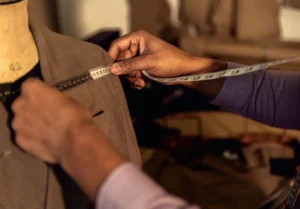
Bespoke tailoring means a garment made to one person’s specifications from a pattern drafted for that person alone. The tailor measures you, drafts the paper pattern, cuts the cloth, and refines the garment through one or more fittings, often with a substantial amount of handwork. The Savile Row Bespoke Association, a benchmark often cited in the trade, describes bespoke in terms of an individually cut paper pattern, skilled individual makers, handwork and fittings.
That is a useful reference point, not a rule every Dubai tailor must meet. Tailors use the word differently, so it is reasonable to ask exactly what your tailor means by it. For a deeper introduction, see our guide to what bespoke tailoring is.
Bespoke vs Made-to-Measure vs Ready-to-Wear
These three terms describe how a suit comes into existence, and they are often confused.
Bespoke | Made-to-measure | Ready-to-wear | |
Pattern | Drafted individually for you | Existing base pattern adjusted to your measurements | Standard patterns in standard sizes |
Customisation | Broadest: proportions, details and construction can be shaped around you | Choice of cloth and styling options within the tailor’s system | Minimal; fixed design |
Fittings | Normally several, often including a basted fitting | Typically fewer; varies by tailor | None, apart from later alterations |
Process | Consultation, measuring, pattern, cutting, fittings, finishing | Measuring, selecting options, production, final fitting | Buy off the rail and alter if needed |
This distinction follows the way British GQ’s Savile Row guide frames it: bespoke uses an individual pattern, made-to-measure adapts an existing style, and ready-to-wear is bought complete. Practices vary between workshops, so treat the table as a framework for questions rather than a verdict on any one tailor. If price is part of your decision, our bespoke suit cost guide for Dubai covers what typically drives it.
The A–Z Glossary of Bespoke Tailoring
Each entry gives a definition, why it matters, and, where useful, a question to put to your tailor.
A-Alteration
An adjustment made to a finished or nearly finished garment, such as hemming, tapering or changing the waist. Why it matters: it defines what is included after delivery and what may cost extra. Ask: “Which alterations are included in the price, and for how long after delivery?”
Armhole (scye). The opening in the jacket body where the sleeve is set. Why it matters: its size and shape strongly influence arm movement, shoulder comfort and the overall silhouette. Ask: “Can I raise my arms and reach forward comfortably in this fitting?”
B-Barathea
A fine cloth with a subtly textured weave, often used for formal jackets and dinner suits. Why it matters: it is a common choice for black-tie commissions. Ask: “Is this cloth suitable for a long evening in a warm venue?”
Baste (basting). Temporary, loose stitching that holds a garment together for a fitting. Why it matters: because it can be unpicked easily, the tailor can make substantial changes before final sewing. Ask: “Will I have a basted fitting?”
Bespoke. A garment made from a pattern drafted for you, shaped by your specifications and normally refined through fittings. This is the term that deserves the most scrutiny. Ask: “Is my pattern drafted individually, or adapted from a base pattern?”
C-Canvas
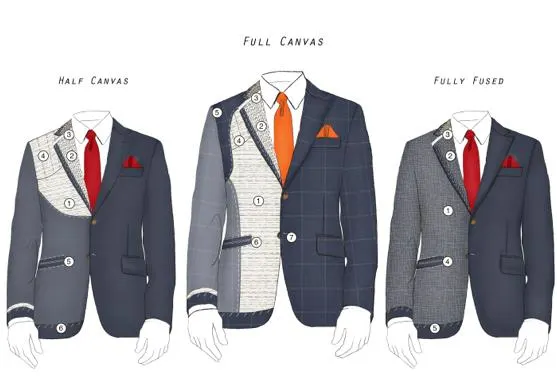
A structural layer inside a jacket that helps shape the chest and lapels and influences how the jacket drapes. It contributes to the jacket’s structure and overall appearance.
Full canvas. Full-canvas construction is often associated with traditional, structured tailoring, although overall quality also depends on the cloth, materials and workmanship. The canvas extends through the front of the jacket, helping shape the chest and lapels. Ask your tailor what the canvas is made from and how it is attached.
Cross-stitch. A hand stitch used to secure canvas, lining or facing layers while allowing flexibility. Why it matters: it is one marker of handwork. Ask: “Where in the jacket is hand-stitching used?” (This entry is general tailoring knowledge; practice varies between workshops.)
D-Dart
A stitched fold that shapes flat cloth around the curves of the body. Why it matters: darts contribute to waist suppression and a cleaner line through the torso.
Dinner jacket (tuxedo). A formal evening jacket, usually with satin or grosgrain details on the lapels. Why it matters: it is relevant for weddings, galas and black-tie events. Ask: “Which lapel facing and cloth suit my event and venue?”
E-Ease
The extra room built into a garment beyond your exact body measurements. Why it matters: too little restricts movement; too much looks loose. Personal preference matters here, so say whether you prefer a closer or more relaxed fit.
F-Fitting
A try-on session where the tailor assesses and refines a partly made garment. Why it matters: fittings are central to bespoke work. Ask: “How many fittings are included, and what happens if the fit still isn’t right?”
Fresco. A high-twist, open-weave worsted wool valued for breathability and crease resistance. Why it matters in Dubai: its open structure is frequently recommended for hot climates, including in Dubai-focused fabric guides. It can feel crisp rather than soft, so ask to handle a swatch. More in the fabric section below, and in our suit fabric glossary.
Fused construction. A method in which interfacing is glued to the jacket cloth instead of sewn in. Why it matters: it is generally quicker and less costly, but may not drape or age the way canvassed construction does. Quality varies, so judge the individual garment.
G-Gorge
The seam where the collar meets the lapel. Why it matters: its height and angle affect proportions and how formal the jacket looks.
H-Half canvas
Canvas in the chest and lapel area without extending through the full front. Why it matters: it sits between fused and full-canvas construction. Ask: “Exactly how far does the canvas extend?”
Hopsack. An open, basket-like weave commonly used for blazers. Why it matters: it is breathable but more prone to snagging, so it generally suits jackets better than hard-wearing trousers.
I-Interlining
Material placed between the outer cloth and lining to add structure or warmth. Why it matters: it influences whether the jacket keeps its shape. In a jacket, the term overlaps with canvas; ask your tailor which materials are used.
J-Jacket length
The measurement from the base of the collar to the hem. Why it matters: it affects balance and how long your legs appear. Length is a style as well as a fit decision, so try options in the mirror.
K-Kersey
A closely woven woollen cloth with a smooth surface, historically used for heavier garments. Why it matters: it is a niche choice and rarely relevant to Dubai’s climate, though it may come up for overcoats or travel.
L-Lapel
The folded front section of the jacket collar, usually notch, peak or shawl. Why it matters: lapel style signals formality and frames the face.
Lining. The inner fabric that finishes the garment. Why it matters in Dubai: it affects comfort and how the jacket slides on and off. Ask: “What is the lining made from, and is it breathable?”
M-Made-to-measure (MTM)
A garment adapted from an existing base pattern to your measurements. Why it matters: it is a legitimate option in its own right, but not the same as bespoke. Ask: “Is this made-to-measure or bespoke?”
N-Notch lapel
The lapel with a small notch where collar meets lapel. Why it matters: it is the standard choice for business suits.
O-Overcoat
A longer outer garment worn over a suit. Why it matters: it is occasionally useful in Dubai’s cooler months, or if you travel to colder places.
P-Pattern
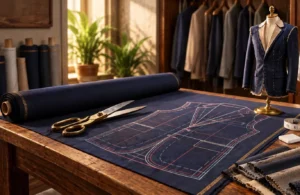
The template from which the garment pieces are cut. Why it matters: in bespoke, it is drafted for you; in MTM, it is adapted from a base pattern.
Peak lapel. A pointed lapel that angles upward toward the shoulder. Why it matters: it reads as more formal and is common on dinner jackets and statement suits.
Q-Quarter lining
A partially lined jacket, a construction option used to reduce weight. Why it matters in Dubai: it can aid ventilation, but ask about durability and how the inside seams are finished. Not every tailor uses this term.
R-Ready-to-wear (RTW)
Factory-produced clothing sold in standard sizes. Why it matters: it is the baseline against which bespoke and MTM are compared.
S-Shawl lapel
A rounded, continuous lapel found mainly on formalwear such as tuxedos.
Super number. A classification of wool fineness, such as Super 120s: higher numbers generally indicate finer fibre. Why it matters: it influences softness and fineness, but it is not a standalone guarantee of quality or durability. Fineness can come at the cost of robustness, so consider how often you will wear the suit. Ask: “Which mill is this cloth from, and what is its weight?”
T-Tropical wool
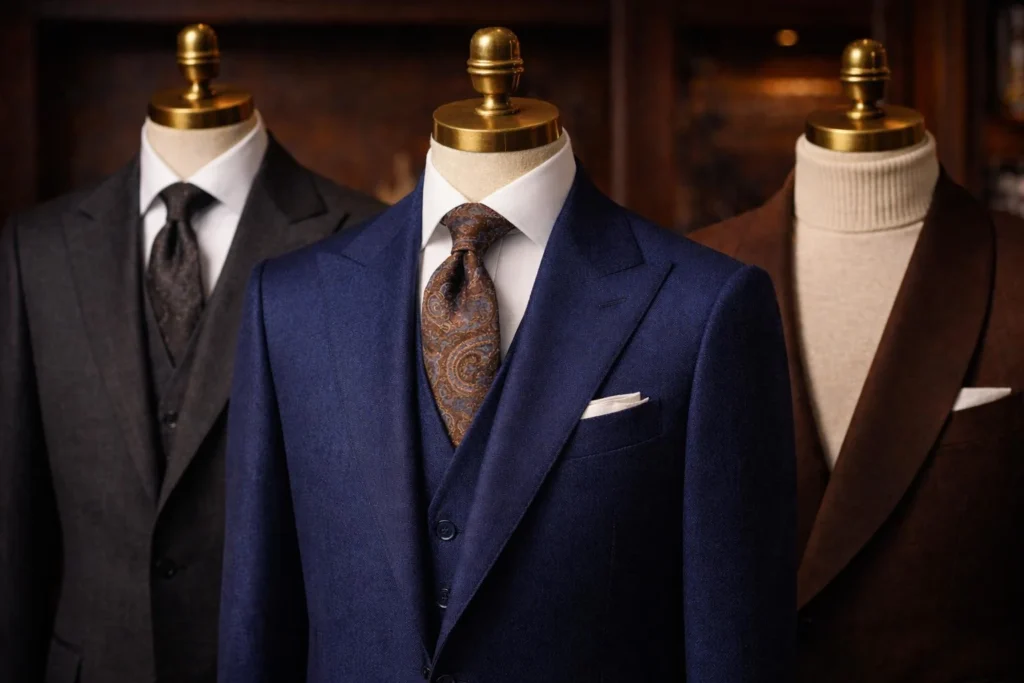
Lightweight wool, often with an open weave, intended for warm weather. Why it matters in Dubai: Dubai-focused sources list it among practical hot-weather suiting options, since it can keep a tailored appearance.
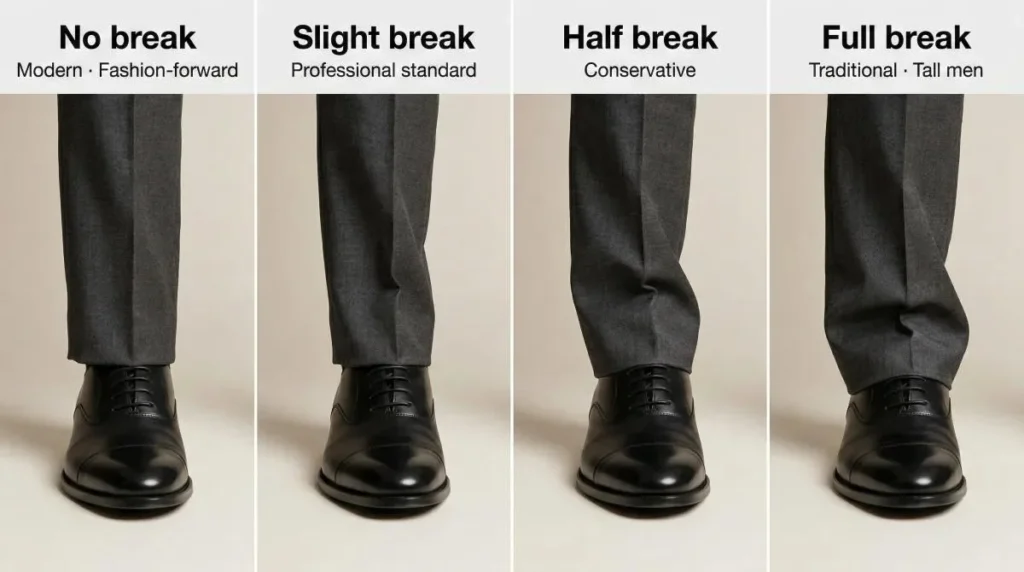
Trouser break. How much the trouser hem rests on the shoe. Why it matters: no break looks sharper and more modern; a fuller break is more traditional. Try the length with the shoes you will actually wear.
U-Undercollar
The underside layer of the jacket collar. Why it matters: it affects collar roll, comfort and shape retention. A well-fitted collar lies against the neck without gaping.
V-Vent
The slit at the back of the jacket: none, single or double. Why it matters: it affects movement and how the jacket sits when you are seated, which matters if you spend long hours at a desk or table.
W-Worsted
Smooth, combed wool yarn or cloth that holds a press and shows its weave clearly. Why it matters: it is a versatile base for business and formal suiting, and fresco is a type of worsted.
X
We have not identified a universally recognised bespoke-tailoring term beginning with X, and we would rather say so than invent one
Y-Yoke
A shaped panel, often at the shoulder or the rear of trousers, that helps control fit. Why it matters: it influences shoulder shape and trouser comfort. Usage varies by garment and tailor.
Z-Zip fly
A trouser front closure using a zip rather than buttons. Why it matters: it is largely a preference between convenience and a traditional approach. Ask: “Which fly do you recommend for my trousers?”
Understanding Suit Fabrics for Dubai’s Climate
Fabric is where Dubai’s conditions matter most. Dubai-focused tailoring sources commonly point to lightweight wool, tropical wool, high-twist wool, fresco, linen and cotton for warm weather. The reasoning is that open weaves allow airflow and natural fibres can help manage moisture. Treat these as general textile principles from local sources, not guarantees for every cloth.
Weight. Cloth weight describes how heavy the fabric is. Lighter cloth is usually cooler, but very light cloth can crease more easily and give less structure. This is a trade-off, not an absolute rule.
Weave. An open weave, such as fresco or hopsack, lets air move through the cloth. Tighter, smoother weaves may look sleeker and sharper but can feel warmer.
Fibre and twist. High-twist wool yarns are tightly spun and are often selected for crease resistance. Linen is airy but wrinkles readily, which some wearers like and others do not. Cotton can be comfortable but may not hold structure as well as wool.
Lining and construction. A jacket’s comfort depends on more than its cloth. Lining material, the amount of lining, and the type of canvas all affect warmth and movement.
Occasion. A business suit, a wedding suit and eveningwear ask different things of a cloth. A cloth comfortable for outdoor wedding photography may not be what you want for a boardroom, and vice versa.
No single cloth is best for every customer in Dubai. Ask to handle swatches, say where and how long you will wear the suit, and let the tailor explain trade-offs. For definitions of individual cloths, see our suit fabric glossary.
Full Canvas and Half Canvas
Canvas construction is often the biggest hidden difference between two jackets. Fused jackets glue interfacing to the cloth; half-canvas jackets use canvas in the chest and lapels; full-canvas jackets extend it through the front. More canvas is generally associated with better drape and longevity, but quality also depends on the cloth, the tailor’s workmanship and the materials used.
Fitting and Alteration Terms Every Client Should Know
The stages of a bespoke fitting. Processes differ, but a typical sequence includes consultation and measuring, pattern drafting, cutting, a basted fitting, further fittings as needed, and final finishing. Ask which stages your tailor includes.
Basted fitting. The first try-on, when the garment is held with temporary stitches. This is when major changes to shoulder, balance or proportion are easiest.
Ease. Discuss how much room you want. Your preferences for movement, how often you sit, and how closely you like clothes to fit all play a part.
Trouser break. Settle this during a fitting, standing in the shoes you will wear.
Alterations. Clarify what counts as an adjustment to fit and what counts as a change to style, since these may be priced differently. A transparent tailor will explain this before you commit; our guide on how to spot a good tailor lists what to look for.
Questions to Ask Your Dubai Tailor
On the garment
- Is my pattern drafted individually, or adapted from a base pattern?
- Is the jacket full canvas, half canvas or fused? What is the canvas made from?
- What lining do you recommend, and why?
On the cloth
- Which mill is this cloth from, and what is its weight and composition?
- Is it suitable for the way I will wear the suit: how many hours, indoors or outdoors?
- How will it crease?
On fittings and alterations
- How many fittings are included?
- What happens if the final fit is not right?
- Which alterations are covered, and for how long?
On time and price
- What is the realistic timeline for my suit, and what could delay it? The Bespoke Index’s Dubai directory reports typical timelines of 2 to 6 weeks across listed makers, but that is a directory-level observation and not a standard. Your tailor’s own estimate is what counts.
- What does the quoted price include: cloth, labour, fittings, delivery?
Frequently Asked Questions
What is bespoke tailoring?
Garments made to your specifications from a pattern drafted for you, usually refined through fittings and substantial handwork.
What is the difference between bespoke and made-to-measure?
Bespoke uses an individual pattern. Made-to-measure adapts an existing pattern to your measurements. Details vary by tailor, so ask how your suit will be made.
How many fittings does a bespoke suit require?
There is no single number. Many bespoke processes include a basted fitting and one or more follow-ups, depending on complexity and fit. Confirm the number in advance.
What is full-canvas construction?
A jacket in which a canvas interlining runs through the full front to shape the chest and lapels, usually sewn rather than glued. Ask what materials are used.
What is the best suit fabric for Dubai’s climate?
There is no universal answer. Lightweight wool, tropical wool, high-twist wool, fresco, linen and cotton are all commonly discussed. The right choice depends on the cloth, construction, lining, occasion and your comfort.
Is linen suitable for a Dubai wedding suit?
It can be, as linen is airy, but it creases readily. If you prefer a crisper look, other cloths may suit you better. Ask to see how a swatch creases.
What does Super 120s mean?
It is a wool fineness classification. Higher numbers generally mean finer fibre, which affects softness and fineness, but it is not a standalone guarantee of quality or durability.
What alterations are normally included in a bespoke suit?
It varies. Many tailors include adjustments connected to fittings, but policies differ. Ask what is covered, and for how long after delivery.
Conclusion
Knowing the vocabulary will not make you a tailor, but it will help you ask sharper questions, compare quotes fairly, and spot vague answers. Start with the terms that most affect your suit: pattern, canvas, cloth and fittings. From there, see our guides to what bespoke tailoring is, the suit fabric glossary, the cost of a bespoke suit in Dubai, and how to spot a good tailor.

Daniel Carter
British, Dubai-based, and I've been around cloth most of my life. My grandfather had a small alterations shop in Leeds. I spent Saturdays there as a teenager, learning the difference between a canvassed chest and a fused one years before I understood why anyone should care.
I write about tailoring from the position of someone who's been fitted, let down, and fitted again. Drape, balance, sleeve pitch, the weight of a proper 13oz worsted. I'm not especially interested in brand names, mostly because they tend to get credit that belongs to the cut.
The UAE is still fairly new to me. Two years in and I'm working through the tailoring houses here, figuring out who cuts well and who just cuts fast. I'd rather take notes than hand out verdicts I haven't earned yet, so treat this as a map that's still being drawn.
Outside of clothes, I eat well and I eat curiously — the odder the menu, the more likely I am to book it. Whisky too, unhurried. Islay when the weather cooperates, Speyside when it doesn't.
Most of what I like takes time to make. That's more or less the whole thesis.
Categories
Recent Articles